Speed is not progress. It is a habit one we inherited without consent, and have never thought to question. We move faster, respond faster, consume faster, and call it efficiency.
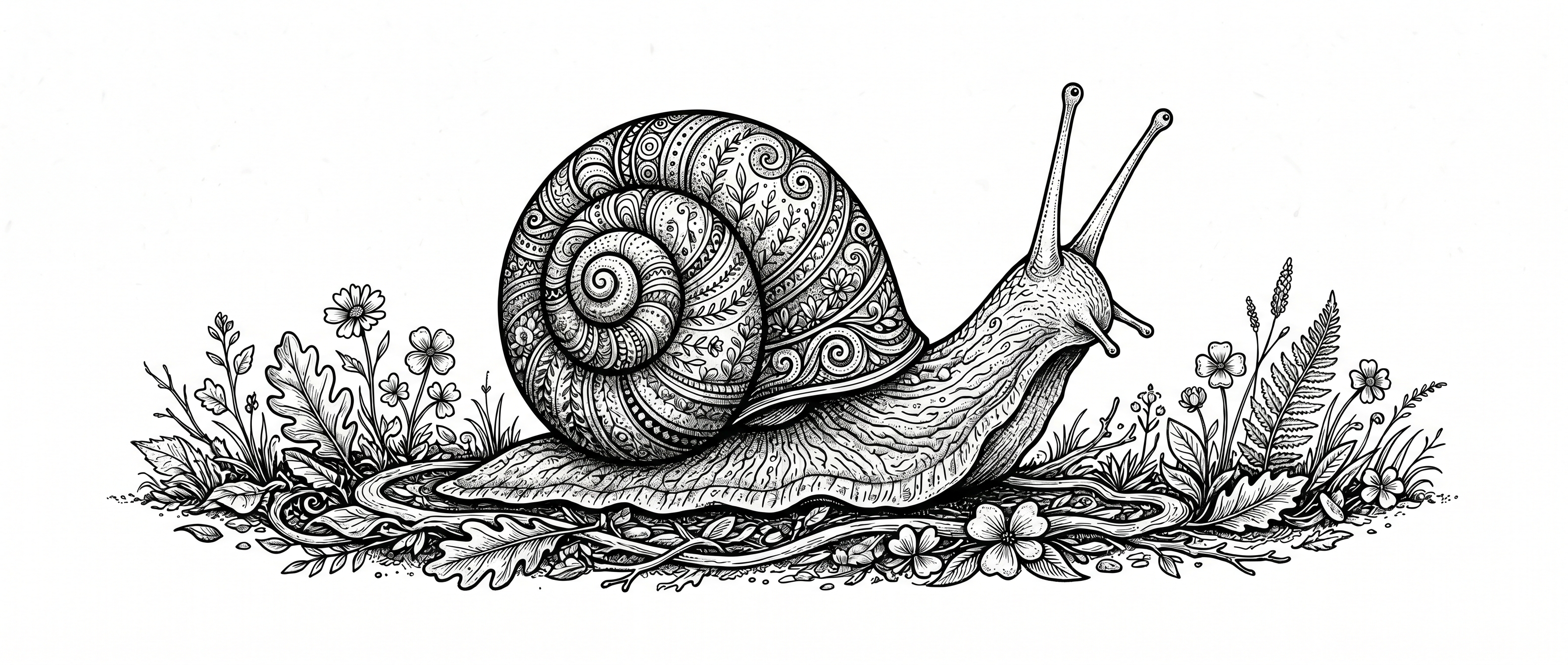
What we have actually built is a culture of permanent emergency, in which slowness reads as failure and stillness as waste. The snail does not apologize for its pace. It carries its home with it, it moves with full attention to the ground beneath it, and arrives.
This is not a metaphor for laziness. It is a model for intention.
The snail does not multitask. It does not check anything. It goes where it is going. To slow down is not to fall behind. It is to decide, for the first time, where you are actually going.
We have confused the velocity of information with understanding. We have confused the volume of communication with connection. We have confused busyness with meaning.
The snail movement asks one question: what would you do differently if you were not in a hurry? The answer to that question is your life, deferred.
This is not nostalgia. The past was not better it was merely slower in places, and that slowness made space for thought, for craft, for conversation that did not end with a notification.
We are not asking for the past. We are asking for time real time, owned time, time that belongs to the person living it and not to a device engineered to consume it.
- Slow your correspondence.
- Slow your consumption.
- Slow your judgments.
Let things take as long as they take. Cook the meal. Read the book. Finish the thought. The world will not stop without your constant attention to it and if it would, that is precisely the problem.